
Hip pain can affect walking, climbing stairs, getting out of a chair, exercising, and even sleeping comfortably. While some hip pain begins after an injury, other cases develop gradually and may be related to the hip joint, surrounding muscles and tendons, or even the lower back.
Because several different structures can produce pain around the hip, understanding where the pain is felt, how it behaves, and what movements affect it can help guide an appropriate assessment and treatment plan.
Where Is Hip Pain Felt?
The location of hip pain can provide useful clues about what may be contributing to the symptoms.
Front of the Hip or Groin
Pain felt in the front of the hip or deep in the groin may be associated with structures inside the hip joint. Possible causes can include:
Hip osteoarthritis
Femoroacetabular impingement
Labral irritation or injury
Hip flexor strain or tendon irritation
Pain may become more noticeable with walking, squatting, climbing stairs, or movements involving deeper hip flexion.
Outside of the Hip
Pain over the outside of the hip is commonly associated with the muscles and tendons around the greater trochanter.
This may include gluteal tendon irritation or greater trochanteric pain syndrome. Symptoms can sometimes become worse with walking, climbing stairs, standing on one leg, or lying on the affected side.
Back of the Hip or Buttock
Pain around the buttock or back of the hip does not always originate from the hip joint itself.
The lower back, sacroiliac region, deep gluteal muscles, hamstrings, and surrounding nerves can all contribute to symptoms in this area.
This is one reason an assessment may need to look beyond the exact location where pain is felt.
Common Causes of Hip Pain
There is no single cause of hip pain. Some common possibilities include:
Hip Osteoarthritis
Hip osteoarthritis may cause pain, stiffness, and reduced function. People may notice difficulty with longer walks, stairs, getting in and out of a car, putting on shoes or socks, or standing after sitting for a long period.
Management generally focuses on reducing symptoms and maintaining or improving physical function rather than attempting to reverse the structural changes of osteoarthritis.
Muscle or Tendon Irritation
The hip is surrounded by several powerful muscles that help control the pelvis and leg.
Changes in physical activity, repetitive loading, prolonged positions, or sudden increases in exercise may sometimes irritate these tissues.
Greater Trochanteric Pain
Pain on the outside of the hip may involve the gluteal tendons and surrounding tissues.
Symptoms can be aggravated by lying directly on the painful side, prolonged walking, stairs, or activities that place additional load through the hip.
Referred Pain From the Lower Back
Sometimes pain that feels like “hip pain” may actually be related to the lumbar spine.
Lower-back conditions can refer pain into the buttock, hip, or leg. When nerve irritation is involved, symptoms may also include radiating pain, tingling, numbness, or weakness.
Related article: Sciatica: Causes, Symptoms, and Treatment Options in Moncton
Related article: Low Back Pain in Moncton: Common Causes and Treatment Options
Hip Pain or Sciatica?
Hip pain and sciatica can sometimes feel similar, particularly when symptoms are located around the buttock or upper leg.
Sciatica generally refers to symptoms associated with irritation of the sciatic nerve or related nerve roots. Symptoms may travel from the lower back or buttock farther down the leg and can sometimes include tingling, numbness, or weakness.
Pain originating primarily from the hip may behave differently and may be more closely associated with hip movement, weight-bearing, or particular positions.
However, symptoms can overlap. An assessment of the lower back, hip movement, strength, neurological signs, and gait can help identify which areas may be contributing.
How the Hip, Knee, Ankle and Foot Work Together

Walking is not produced by one joint acting alone.
The hip, knee, ankle, foot, pelvis, and lower back work together during every step. Changes in mobility, strength, balance, or movement strategy in one area may influence how forces are managed elsewhere.
For example, limited hip movement may lead a person to compensate through the pelvis, lower back, knee, or foot. Likewise, pain in the knee or foot may alter walking and change how the hip is loaded.
This does not mean that every movement difference causes pain. Rather, looking at the whole movement pattern can sometimes provide useful information when symptoms are persistent or recurrent.
Related article: Knee Pain in Moncton: Causes, Osteoarthritis & Treatment Options
When Should Hip Pain Be Medically Assessed?
Many episodes of mild hip pain improve with time and appropriate activity modification. However, some symptoms require medical assessment.
Seek prompt medical attention when hip pain is associated with:
A significant fall or injury
Inability to walk or bear weight
Severe or rapidly worsening pain
A hot or significantly swollen joint
Fever or feeling systemically unwell
New numbness, weakness, or significant neurological symptoms
Persistent pain that interferes with sleep, walking, work, or normal daily activity should also be properly assessed.
Movement and Exercise for Hip Pain
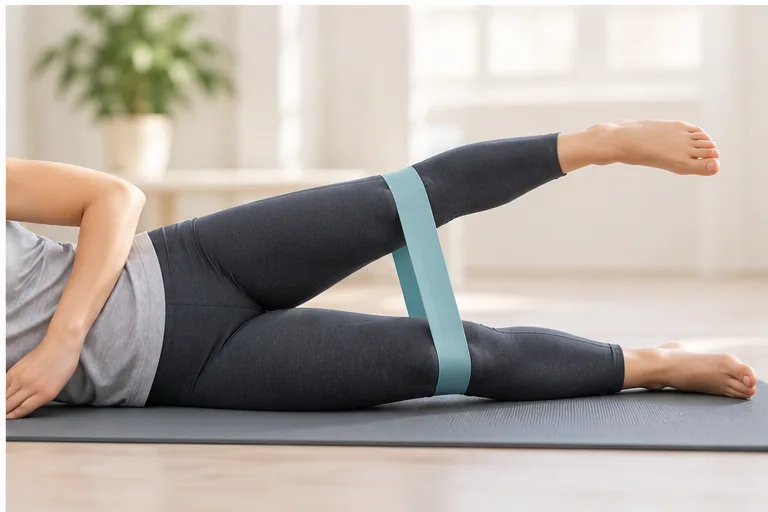
Appropriate movement is an important part of managing many musculoskeletal hip conditions.
For hip osteoarthritis in particular, exercise and active management are important components of care. Depending on the individual, this may include:
Hip and gluteal strengthening
General lower-body strengthening
Mobility or range-of-motion exercises
Aerobic activity
Balance and movement-control exercises
Gradual modification of activities that aggravate symptoms
The appropriate type and amount of exercise depends on the diagnosis, current function, symptoms, and individual tolerance.
Where May Chuna Manual Therapy Fit?

Chuna manual therapy is a hands-on treatment approach used in Korean medicine.
Depending on the individual assessment, Chuna manual therapy may be considered to address pain, mobility restrictions, muscle tension, and movement limitations involving the hip, pelvis, lower back, or related areas.
Korean medicine clinical practice guidelines for degenerative hip osteoarthritis include Chuna as an option that may be considered for improving pain, physical function, and quality of life.
For osteoarthritis, however, hands-on treatment should not be viewed as a way to reverse structural joint changes or as a replacement for active management. Exercise, appropriate activity, and maintaining overall function remain important parts of care.
Chuna manual therapy may therefore be used as one component of a broader individualized treatment plan when appropriate.
Where May Acupuncture Fit Into Hip Pain Care?
Acupuncture is not intended to reverse or eliminate the structural changes of osteoarthritis itself.
The 2024 Korean Medicine Clinical Practice Guideline for degenerative hip osteoarthritis recommends considering acupuncture for the improvement of pain and physical function.
However, recommendations are not uniform across clinical guidelines. For example, the UK's National Institute for Health and Care Excellence (NICE) does not recommend acupuncture or dry needling for the management of osteoarthritis.
These differences reflect variations in how available evidence is evaluated and highlight the importance of individualized care.
For some patients, acupuncture may be considered as one component of a broader approach aimed at managing pain and supporting physical function, alongside appropriate movement, exercise, medical assessment, and other forms of care.
Acupuncture should not replace medical assessment when symptoms suggest a fracture, significant joint injury, infection, neurological problem, or another condition requiring medical care.
What to Expect During an Assessment
An assessment for hip pain may consider:
Where the pain is located
How and when the symptoms began
Movements or activities that aggravate symptoms
Hip range of motion
Muscle strength and function
Possible lower-back involvement
Previous injuries
Walking and gait patterns when relevant
The goal is to better understand the factors that may be contributing to the symptoms rather than assuming that every case of hip pain has the same cause.
Hip Pain Care in Moncton
If hip pain is affecting your walking, mobility, exercise, work, or everyday activities, an individualized assessment can help identify which areas may be contributing and whether acupuncture or Chuna manual therapy may be appropriate as part of your care.
Learn more about my acupuncture and manual therapy services.
Jung Dae Kwon, R.Ac.
Registered Acupuncturist in Moncton, New Brunswick
Focused on chronic pain, musculoskeletal care, movement, posture and gait.
Book an acupuncture appointment in Moncton.
References
Korean Acupuncture & Moxibustion Medicine Society. Clinical Practice Guideline of Korean Medicine for Degenerative Arthritis (Hip and Hand). Korean Medicine Clinical Practice Guideline. July 2024.
National Institute for Health and Care Excellence (NICE). Osteoarthritis in over 16s: Diagnosis and Management (NG226). NICE Guideline. 2022.
Chamberlain R. Hip Pain in Adults: Evaluation and Differential Diagnosis. American Family Physician. 2021;103(2):81–89.
Arthritis Society Canada. Exercises for Osteoarthritis of the Hip & Knee.
This article is provided for general educational purposes and is not a substitute for medical diagnosis or treatment. Individual results and treatment needs may vary.
FAQ
Answers to your questions
Common questions about acupuncture care, appointments, treatment, insurance, and what to expect during your visit.
How do I book an appointment?
Do you accept walk-in patients?
Are you licensed and experienced?
Can I reschedule or cancel my appointment?
What types of health insurance do you accept?
Start With an Individualized Assessment
Book your appointment today and start feeling better.

Start With an Individualized Assessment
Book your appointment today and start feeling better.
Start With an Individualized Assessment
Book your appointment today and start feeling better.